
The short version
- An undisclosed sponsored post can be treated as deceptive advertising when a material connection would affect how viewers evaluate the endorsement.
- There is no universal automatic fine for forgetting #ad once. The more common escalation is correction, platform action, a brand response, a regulator warning or an order requiring future compliance.
- In the United States, both influencers and advertisers can be responsible. The FTC's Endorsement Guides are guidance, but deceptive endorsements can still trigger enforcement under the FTC Act.
- Canada and the United Kingdom have their own enforcement systems, including corrective orders, public sanctions and potentially large monetary penalties in serious cases.
- The safest practice is simple: disclose the commercial relationship clearly, early and in the content itself, then use the platform's paid-partnership tool as an additional signal rather than the only one.
The most likely first consequence is not a fine
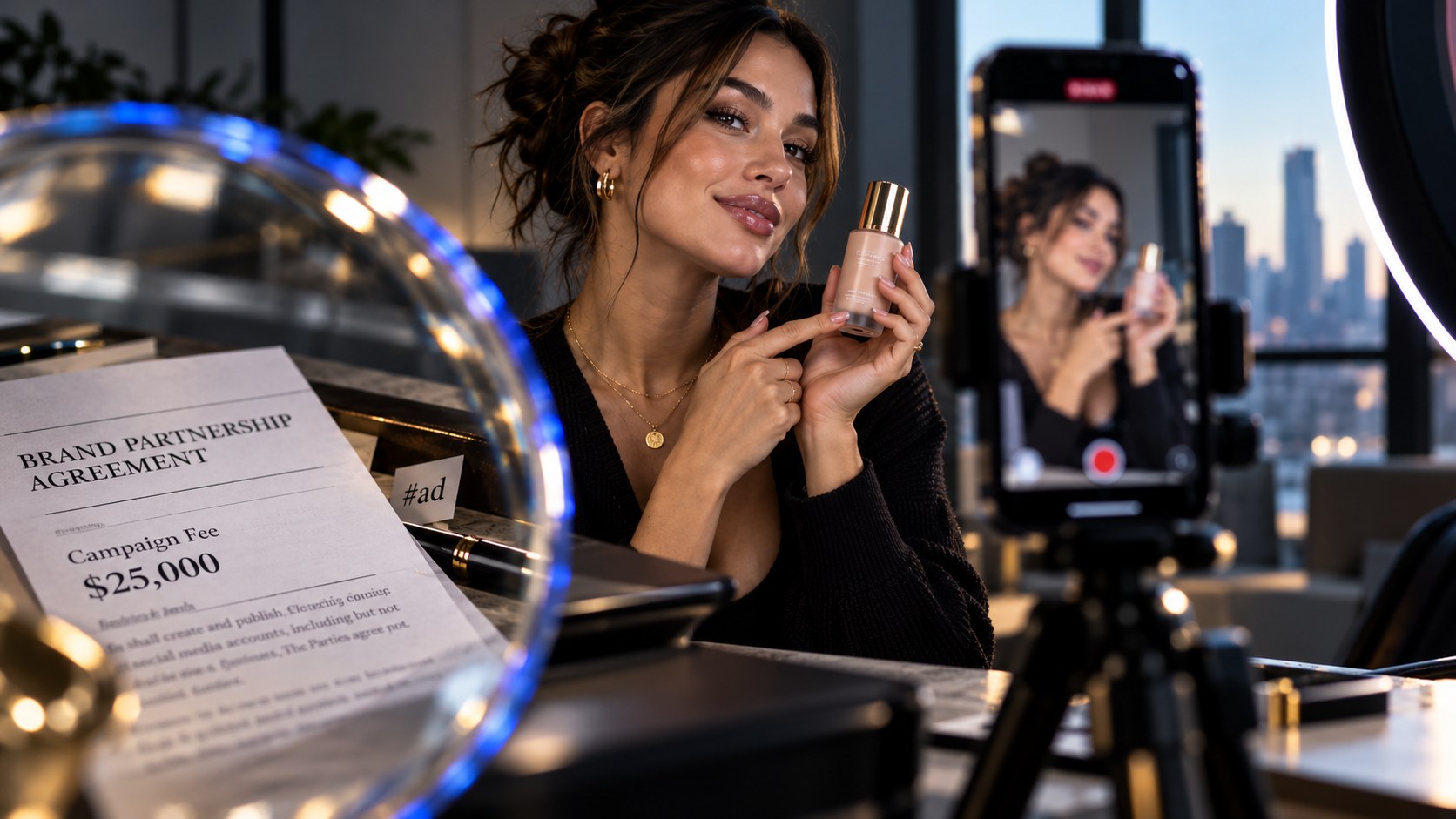
A creator posts a glowing product recommendation. The brand paid them. There is no Ad, no paid-partnership label and no other obvious disclosure.
What happens next?
Often, nothing visible happens immediately.
The post may sit online for days. It may make sales. It may never attract a regulator’s attention. That is one reason undisclosed influencer marketing can look consequence-free from the outside.
But the actual system does not work like a parking ticket where every hidden sponsorship automatically produces a fixed fine. It works more like an escalation ladder.
A missed disclosure can lead to:
- the creator being told to add or correct the disclosure;
- reduced distribution or other platform action;
- the brand or agency intervening;
- a regulator warning the creator, advertiser or both;
- a public ruling, compliance order or monitoring requirement;
- and, in more serious, repeated or legally aggravated cases, monetary penalties or court action.
The important distinction is risk versus certainty. A creator can violate advertising rules without being caught. That does not make the post compliant.
What counts as an undisclosed ad?
The basic question is whether there is a material connection between the person recommending something and the business benefiting from that recommendation.
The U.S. Federal Trade Commission tells influencers to disclose financial, employment, personal and family relationships with brands. Money is only the obvious version. Free products, discounts, trips, commissions and other benefits can also matter. The FTC’s influencer guidance says the disclosure obligation can apply even when the creator received something other than cash.
Canada’s Competition Bureau takes a similar approach. Its influencer-marketing guidance lists payment, commissions, free products or services, discounts, free trips or event tickets, and personal or family relationships as examples of material connections.
| Relationship | Usually needs disclosure? | Common failure |
|---|---|---|
| Cash sponsorship | Yes | No label, or #ad buried after other text |
| Affiliate commission | Yes | Posting the link without saying purchases can generate commission |
| Free product or trip | Often yes | Treating “gifted” as if it explains who supplied the benefit |
| Brand employment or consulting relationship | Yes when not obvious | Presenting the endorsement like an independent opinion |
| Creator’s own product | If ownership is not obvious | Talking about the product without making the relationship clear |
| Product bought normally with no brand relationship | No special ad disclosure | Assuming every positive review is sponsored |
The disclosure also has to be understandable where the audience actually sees the endorsement.
A sponsorship notice hidden behind “more”, placed only in a profile bio or left at the end of a long video may fail even though the creator technically wrote something somewhere.
The FTC’s current Q&A says a TikTok disclosure placed only in the small text description is very unlikely to be clear and conspicuous. For video endorsements, it says a disclosure should match the way the endorsement is communicated: visual claims need at least a visual disclosure, audible claims need at least an audible one, and endorsements made both ways are better disclosed both ways. A YouTube description alone is not enough on its own either.
The first real consequence can come from the platform
Regulators are not the only enforcement layer anymore.
TikTok’s current commercial-content rules are unusually explicit. The platform says creators promoting a brand, product or service must use its commercial content disclosure setting. If TikTok flags a video as possible branded content without the proper disclosure, the creator can receive an in-app notification and has 24 hours to disclose or appeal. After that, the video can become ineligible for the For You feed. TikTok says improper disclosure can therefore directly affect organic distribution.
That turns disclosure from a purely legal issue into a distribution issue.
YouTube also requires creators to tell the platform when content includes a sponsorship, endorsement or other commercial relationship by using its paid-promotion control. The platform separately reminds creators that using YouTube’s label does not replace their legal obligations. In September 2026, YouTube also announced automated branded-content detection that may add a disclosure label when its systems identify undeclared sponsored content. The creator still remains responsible for compliance.
Platforms are increasingly becoming part of the enforcement system rather than neutral hosts waiting for a complaint.
A platform label is useful. It is not always enough.
One of the easiest mistakes is assuming that tapping “Paid partnership” solves everything.
It can help. It may also be required by the platform.
But the FTC specifically warns that a built-in disclosure tool is not automatically sufficient. The question remains whether the average viewer actually notices and understands the commercial relationship. Placement, readability and clarity still matter. The agency says responsibility ultimately rests with the influencer and the brand, not the platform.
The UK’s advertising regulator has moved in the same direction. Current ASA/CAP guidance says platform tools such as Instagram’s paid-partnership label can help, but may not always be enough on their own. The regulator generally expects influencer ads to be obviously identifiable upfront and considers a prominent Ad label the clearest default. An @brand tag, discount code or vague partnership language may not communicate that the post is advertising.
The low-risk approach is therefore additive:
platform disclosure + plain-language disclosure + placement people cannot reasonably miss.
In the U.S., the FTC can go after the creator, the brand or both
The FTC’s Endorsement Guides are not themselves a regulation carrying an automatic fine for every mistake. They explain how the agency applies the FTC Act’s prohibition on unfair or deceptive practices to endorsements and testimonials.
That nuance matters.
A creator does not owe the government $53,088 because one #ad was missing.
But the FTC can investigate deceptive endorsement practices, send warning letters, seek orders and pursue penalties when the legal requirements for those remedies are met.
The agency has also made clear that creators are not outside the system.
In 2017, the FTC brought its first case against individual social media influencers when it charged the owners of CSGO Lotto with promoting the gambling site without adequately disclosing that they owned it. The settlement did not produce a giant first-offence fine. It produced an enforceable order requiring clear disclosure of material connections.
That is an important model for understanding the system: the first serious regulatory consequence can be a legal obligation governing future behaviour.
In November 2023, the FTC went more directly at influencer posts. It sent warning letters to a dozen influencers and two trade associations over Instagram and TikTok content promoting aspartame or sugar. The agency said some posts appeared to have no material-connection disclosure or disclosures that were inadequate because of placement or wording. Those letters also warned recipients about potential civil penalties for future violations after notice.
The penalty ceiling cited in those 2023 letters was lower at the time. The FTC raised the relevant maximum to US$53,088 per violation in 2025, and a September 2026 Federal Register notice said the 2025 levels would remain in effect for 2026.
Again, that number is a statutory ceiling available under particular enforcement authorities. It is not a universal price per undisclosed post.
The advertiser is not protected just because the influencer posted it
Brands sometimes treat disclosure as the creator’s problem.
Regulators do not.
The FTC says advertisers can be liable when they disseminate endorsements without necessary disclosures or hire and direct endorsers who fail to disclose material connections. It expects businesses to train and monitor the creators working on their behalf.
That expectation shows up repeatedly in enforcement history.
Lord & Taylor settled FTC charges in 2016 after paying 50 fashion influencers between $1,000 and $4,000 each and giving them a free dress without requiring the posts to disclose that compensation. Warner Bros. settled a separate case over paid gameplay videos whose sponsorship disclosures were inadequate or hidden below the visible portion of YouTube descriptions.
The lesson from those cases was not that brands should add one sentence to an influencer contract and walk away. Later FTC guidance has been explicit that advertisers need reasonable monitoring and should deal with creators who do not comply.
For a creator, that creates a second consequence even when no regulator appears: the brand relationship itself can become a compliance problem.
Whether that means a correction request, withheld approval, contract dispute, non-renewal or termination depends on the actual agreement. There is no universal contract consequence. But a brand that has been told to monitor influencer disclosures has an incentive not to ignore repeat failures.
The Teami case shows why big fine headlines need context
One of the best-known influencer-marketing enforcement stories involved Teami, a seller of teas and skincare products.
The FTC alleged that Teami paid well-known influencers whose Instagram posts did not adequately disclose the sponsorship. Some disclosures could only be seen after users clicked “more”. The agency also alleged that Teami made unsupported weight-loss and disease claims.
The resulting order included a US$15.2 million judgment, suspended after payment of US$1 million because of the defendants’ financial condition.
That number is sometimes repeated as if a hidden sponsorship label alone created a million-dollar influencer fine.
It did not.
The FTC’s complaint combined the influencer-disclosure allegations with serious unsupported health claims. The agency also sent warning letters to ten influencers named in the complaint.
The case is useful precisely because it shows how disclosure failures become more dangerous when they sit inside a broader deceptive advertising campaign.
Canada can treat hidden sponsorships as deceptive marketing
Canadian influencers are not operating under the FTC’s rules simply because much creator advice online is written for Americans.
The Competition Bureau says the deceptive marketing provisions of Canada’s Competition Act apply to anyone promoting a product, service or business interest, including influencers. Its guidance is direct: if sponsored content is presented without making the commercial relationship clear, it can be misleading.
Canadian civil remedies for deceptive marketing are substantial.
A court can order a person to stop the conduct, publish a corrective notice and pay an administrative monetary penalty. For an individual, the maximum for a first order is the greater of C$750,000 or three times the value of the benefit derived from the deceptive conduct, where that benefit can reasonably be determined. For a corporation, the first-order maximum is the greater of C$10 million or a benefit/revenue-based amount defined by the Act. The Competition Bureau publishes the current penalty framework here.
Those are maximum available remedies for conduct that actually reaches that level of enforcement. They should not be read as the expected punishment for a first accidental omission on an Instagram Story.
But they make one thing clear: in Canada, disclosure is not just influencer etiquette.
In the UK, repeat non-disclosure can become very public
The UK has a particularly visible enforcement ladder.
The ASA can rule that influencer advertising breached the CAP Code, require changes and escalate repeat non-compliance. Its current non-compliant social media influencer page publicly lists creators who have repeatedly failed to make advertising clear, puts them under enhanced monitoring and warns that further sanctions can include paid ads highlighting their non-compliance and referral to enforcement partners.
ASA sanctions can also involve working with platforms to remove non-compliant advertising.
Separate from that advertising-code system, the Competition and Markets Authority enforces consumer law. Its creator guidance was updated in 2025 after the Digital Markets, Competition and Consumers Act 2024 changed the legal framework. The CMA now has direct consumer-enforcement powers and can impose substantial penalties on businesses that breach relevant consumer law — up to the greater of £300,000 or 10% of global turnover for an infringement within scope. The CMA explains that direct enforcement regime here.
Again, the systems are different: an ASA ruling is not the same thing as a CMA fine.
But a creator repeatedly refusing to disclose ads can move from a content-compliance problem into formal consumer-law enforcement.
Disclosure rules also protect the thing influencers are selling: independence
A sponsorship works because the advertisement is delivered through a person whose ordinary content does not look like an advertisement.
That is the value of influencer marketing.
It is also the reason disclosure matters.
A follower deciding whether to trust a recommendation may treat it differently after learning that the creator received $5,000, a free hotel stay, a commission on each sale or an ownership stake in the company. The law does not assume the recommendation becomes false after payment. It assumes the relationship is information the audience may reasonably need when evaluating the recommendation.
This is part of the same broader internet problem SIGNULL tracks elsewhere: visible signals can travel much faster than the context needed to interpret them. A screenshot, dashboard or testimonial can look self-explanatory until the missing relationship changes its meaning. That is why context matters when reading online proof.
The commercial relationship is part of the context.
If a creator realizes an ad was posted without disclosure, fix the post
The sensible response to a missed disclosure is not complicated.
If the platform allows editing, add a clear disclosure immediately and use the platform’s branded-content setting. For video, put the disclosure where viewers actually encounter the endorsement instead of relying on the description alone. If the creator is working through a brand or agency, tell them the error was corrected.
Keep the relevant campaign records: the agreement, payment or gifted-product documentation, the original post and the corrected version.
If a regulator, platform enforcement team or lawyer has already contacted you, the situation has moved beyond a routine caption edit and should be handled on that basis.
What does not work well is trying to hide the relationship more elegantly.
#sp, #collab, #ambassador, thanks [brand], a discount code or a disclosure buried after twenty hashtags may still leave the audience guessing. The FTC and UK regulators both focus on whether ordinary people can recognize the advertising without having to decode creator-industry language.
The cost of disclosure is tiny compared with the downside of hiding it
Influencers are allowed to advertise.
They are allowed to take sponsorships, accept free products, use affiliate links, promote their own businesses and make money from recommendations.
The legal problem begins when commercial content is presented in a way that makes it look meaningfully more independent than it is.
Most disclosure failures will not end with a courtroom or a six-figure penalty. Some will end with a corrected caption. Some will end with reduced distribution. Some will produce a warning letter or public ruling. Repeat or serious conduct can go much further.
That range is exactly why the best rule is simpler than memorizing every regulator’s penalty table:
If money, products, commissions, travel, employment, ownership or another meaningful relationship sits behind the recommendation, make that relationship obvious before the audience has to wonder.
Sources & reference material
- Disclosures 101 for Social Media InfluencersFederal Trade Commission · Accessed Oct 10, 2026
FTC guidance on material connections, when influencers must disclose them and how disclosures should be made.
- FTC's Endorsement Guides: What People Are AskingFederal Trade Commission · Accessed Oct 10, 2026
FTC guidance on clear and conspicuous disclosures, platform tools, video disclosures, free products and responsibility shared by influencers and advertisers.
- Federal Trade Commission Announces Updated Advertising Guides to Combat Deceptive Reviews and EndorsementsFederal Trade Commission · Accessed Oct 10, 2026
The 2023 Endorsement Guides revisions clarified clear-and-conspicuous disclosure standards, potential liability and limits of built-in platform disclosure tools.
- FTC Warns Two Trade Associations and a Dozen Influencers About Social Media Posts Promoting Consumption of Aspartame or SugarFederal Trade Commission · Accessed Oct 10, 2026
Example of warning letters sent directly to influencers over allegedly missing or inadequate sponsorship disclosures, including notice of possible future civil penalties.
- Tea Marketer Misled Consumers, Didn't Adequately Disclose Payments to Well-Known Influencers, FTC AllegesFederal Trade Commission · Accessed Oct 10, 2026
Teami enforcement matter involving paid influencer disclosures and unsupported health claims; the company faced a $15.2 million judgment suspended upon payment of $1 million.
- FTC Publishes Inflation-Adjusted Civil Penalty Amounts for 2025Federal Trade Commission · Accessed Oct 10, 2026
Sets the $53,088 maximum for violations covered by Sections 5(l), 5(m)(1)(A) and 5(m)(1)(B) of the FTC Act.
- Adjustments for 2026, Regarding the Federal Civil Penalties Inflation Adjustment ActFederal Register / Federal Trade Commission · Accessed Oct 10, 2026
FTC notice stating that no 2026 inflation adjustment would be made and that 2025 civil penalty levels would remain in effect.
- Influencer marketing and the Competition ActCompetition Bureau Canada · Accessed Oct 10, 2026
Canadian guidance stating that deceptive marketing provisions apply to influencers and that material connections such as payment, free products, discounts, travel and personal relationships should be disclosed.
- Penalties and remedies for non-complianceCompetition Bureau Canada · Accessed Oct 10, 2026
Current civil remedies and maximum administrative monetary penalties available for deceptive marketing practices under Canada's Competition Act.
- Recognising ads: Social media and influencer marketingAdvertising Standards Authority / CAP · Accessed Oct 10, 2026
Current UK guidance on prominent upfront ad labels, platform disclosure tools and shared responsibility between influencers and brands.
- Non-compliant social media influencersAdvertising Standards Authority / CAP · Accessed Oct 10, 2026
Current ASA enforcement page describing public listing, enhanced monitoring and further sanctions for repeat influencer disclosure failures.
- Social media endorsements: guidance for content creatorsCompetition and Markets Authority · Accessed Oct 10, 2026
UK consumer-law guidance for creators covering paid, gifted, discounted and other incentivised social media content.
- How the CMA uses its direct consumer enforcement powersCompetition and Markets Authority · Accessed Oct 10, 2026
Explains the CMA's direct consumer enforcement process and maximum business penalties under the Digital Markets, Competition and Consumers Act 2024.
- About the Commercial Content Disclosure setting for creatorsTikTok for Business · Accessed Oct 10, 2026
TikTok requires commercial-content disclosure and says improperly disclosed videos may lose For You feed eligibility after a system notification and response window.
- Add branded content restrictions & disclosure labelsYouTube Help · Accessed Oct 10, 2026
YouTube requires creators to declare branded content using the paid promotion control while also complying with applicable legal and regulatory obligations.
- Giving you tools to easily disclose paid partnerships with new controls & automated disclosuresYouTube · Accessed Oct 10, 2026
YouTube announced updated branded-content labels and automated detection that may add a disclosure when undeclared branded content is detected.